Inflatable Party Rental Trends: New Slides, Games, and Combo Units for 2026
Every spring I start getting the same texts from repeat clients: What’s new this year, and what will keep a backyard of mixed ages busy for three hours without chaos? The 2026 lineup answers that with smarter wet and dry options, better flow for larger crowds, and themes that age well over multiple seasons. For anyone planning a birthday party rental or building a calendar for company picnics and school carnivals, the direction is clear. Manufacturers refined what works, trimmed what doesn’t, and gave bounce house rental companies tools to move gear faster and keep it safer.
What changed since last season
The biggest shift sits at the intersection of flexibility and footprint. Inventory that can run as a wet dry slide rental without changing the blower or the anchoring plan is getting priority because it works in more climates and across drought restrictions. Combo bounce house rental units got wider entrances and shorter choke points to reduce lines. Reaction-based games that use light pods, meanwhile, continue to replace old-school carnival games because they scale for all ages and hold attention without wasting space.
On the operations side, equipment is moving toward easier cleaning, faster drying, and fewer loose accessories. Detachable pools on water slide rental units now use quick-release buckles you can work with gloves on. Modular panels on combos cut turnaround time between a toddler party and a pre-teen event. The goal is the same for rentals and renters: less friction, more play.
Smarter slides, wetter fun, and better landings
If you have not looked at inflatable slide rental options in a few years, the new generation solves three common complaints. First, bigger does not always mean better. In neighborhoods with small yards, a 16 to 18 foot slide with a deeper splash pad feels safer for younger kids than a towering giant water slide rental that needs a perfect setup. In 2026, more of those mid-height units ship with curved runouts to slow riders without a hard stop. If you host a kids party rental with mixed ages, that shape matters more than height.
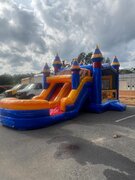
Second, detachable pools are standard rather than optional. That means the same slide can run dry in April and wet in July. You will see terms like hybrid or 2-in-1 on spec sheets. The difference shows on delivery day. With a true hybrid, the landing becomes a foam-padded bumper when dry and a pool when wet, with no extra blower or patch panel. This change saves 10 to 15 minutes on setup and another chunk of time on teardown, which matters during a busy Saturday.
Third, dual-lane slides are back in force but with better lane dividers and stronger netting at the top. Races are fun until someone leans over a divider and collides. Top-tier units now include higher side walls and backyard inflatable obstacle course center rails that keep riders honest. It is the kind of incremental engineering families rarely notice until it prevents a scare.
If you are trying to pick between a 20 foot single lane and a 17 foot dual lane, ask yourself what matters more, a taller thrill for a few or faster throughput for many. For school field days and church picnics, the dual lane wins. For a backyard party rental with a dozen kids, the single lane with a larger splash area usually makes more sense and keeps supervision simpler.
Combo units that actually earn the “combo” label
A decade ago, many combos felt like a bounce area with a token slide. The 2026 crop earns its square footage. You will find 5-in-1 or 7-in-1 language, but the real test is how kids move. The best layouts create a loop: climb, slide, short obstacle, bounce, then back to the climb. When there is flow, kids spread out, lines shrink, and refereeing gets easier.
For families hoping to cover a wide age range without renting two pieces, combos that include a mini obstacle lane are the sweet spot. Younger kids get a manageable climb and slide. Older kids chase each other through pop-ups and a short tunnel. If you are booking a combo bounce house rental for a small yard, measure the depth carefully. Many 2026 models keep the width under 15 feet and tuck the slide inside the footprint so you can set up along a fence line without losing bounce space.
One more quiet trend: neutral themes. Bright colors and abstract patterns age better than licensed art and work across birthdays, block parties, and school spirit days. Interchangeable banners are still around for those who want a unicorn morning and a sports afternoon, but many renters now skip the banner to avoid flapping in the wind and the extra cleaning seam.
Interactive games with lights and quick resets
The buzz around IPS light systems never really faded. If anything, the 2026 sets are more reliable. For anyone not familiar, small wireless light pods mount to an inflatable or a frame. They light up randomly, and players tap them as fast as they can. It is simple, replayable, and works at a backyard party rental or a corporate team-building hour.
I watched a group of fifth graders run a three-minute rotation on a 10-pod wall this spring, then shift to parents as dusk fell and the lights popped against the vinyl. The scoring keeps older kids engaged, but the rules are simple enough for preschoolers with a helper. From a logistics standpoint, these games pack down to the size of a backpack, use AA or rechargeable battery packs, and bolt onto obstacle walls, archery hoverball frames, or standalone targets. If you choose one interactive add-on for a mixed-age event, make it lights.
Other games holding their ground in 2026 include inflatable axe throws with foam or Velcro heads, soccer darts with giant boards, and compact sports combos that rotate between basketball and penalty kick drills. The common thread is quick reset, clear scoring, and no messy consumables.
Obstacle courses for yards that are not football fields
Obstacle course rental options used to assume a straight 60 foot run or nothing. The new modular sets bend, snake, and double back, which opens them up for realistic yards and community rooms. A 40 foot figure-eight gives you the same climb, squeeze, and slide moments without needing a clear driveway or a park permit.
Dual-lane courses remain the standard because they move lines. For safety, look for higher netting along any elevated platforms, guard flaps at tunnel entries to protect fingers, and clear signage for one-way traffic. When a course shares a backyard with a jumper rental or a toddler bounce house rental, place the entrance side closest to the supervising adult’s line of sight. Courses draw a crowd, and you want your eyes on the merge point.
Toddler zones that parents can trust
Parents with kids under five want soft landings, no blind corners, and shade. The most useful toddler bounce house rental setups this year add built-in shade covers and slightly lower step heights that little legs can manage without a boost. Many pair a small slide with open bounce space so siblings can play close by without knocking into each other. If you are mixing toddlers and older kids, stage the toddler zone across the yard with a natural boundary like a garden bed or picnic table, and keep one dedicated adult nearby.
Soft play add-ons, often foam blocks and mini climbers, continue to book well for first and second birthdays. They are not inflatables, but they pair nicely within the same footprint and give you an option for indoor winter parties.
Safety and setup details that matter in 2026
The safety conversation should not be a scare tactic. A competent bounce house rental company treats it like it treats punctuality, non-negotiable. Most commercial inflatables use heavy-gauge, fire-retardant vinyl that meets standards such as NFPA 701. Seams should be double or quadruple stitched, and high-wear areas get extra reinforcement. None of that means much without the basics, which start at the ground.
Anchoring needs match the manufacturer’s spec sheet, but a good rule of thumb is 18 inch stakes into undisturbed soil for outdoors and properly weighted sandbags or water barrels indoors or on hard surfaces. Wind is the line in the sand. Many operators set a hard stop around sustained winds of 15 to 20 mph and gusts above that range. If your yard is a wind tunnel between houses, plan for a dry day backup like interactive games that can move inside.
Power rarely gets the attention it deserves. Standard blowers for a mid-size bounce house draw around 7 to 9 amps on a 115 volt circuit. Larger slides use two blowers, and obstacle courses may use three. You cannot stack all of them on a single 15 amp outlet without tripping breakers. A good crew will split circuits across the house, run proper outdoor-rated cords, and use GFCI protection near water. When power is not feasible, quiet-inverter generators are a practical add-on, but check noise sensitivity for early morning setups in tight neighborhoods.
Water use varies by slide design and hose pressure. Expect 4 to 8 gallons per minute with a continuous flow to keep surfaces slick. Some units can run with a reduced trickle and still stay safe. Where drought conditions apply, ask for dry mode. Hybrid slides with deep landings keep the fun without the hose.
Cleaning protocols improved over the last few seasons. Crews carry pump sprayers for spot cleaning, leaf blowers for debris, and clean towels to dry seams. A full post-event wipe down and dry-out back at the warehouse helps avoid mildew. It is a grind, but that hour of work extends the life of the gear and keeps allergies at bay.
Pricing realities for 2026
Rates vary by region, fuel costs, and insurance, so treat ranges as guideposts. For a standard 13 by 13 bounce house rental, most markets sit between 150 and 300 dollars for a day. A modern combo with a slide and basketball hoop often falls between 225 and 450 dollars, depending on size and whether you add a banner. Water slide rental prices typically range from 300 to 700 dollars for heights up to 20 feet. Giant water slide rental pieces, 22 to 27 feet tall or with long slip-and-slide extensions, can land anywhere from 600 to 1,200 dollars or more, especially on peak Saturdays.
Obstacle course rental pricing usually spans 350 to 900 dollars based on length and number of blowers. Toddler-specific units are often more budget friendly, 125 to 225 dollars, and can be part of a package with soft play. Wet dry slide rental adds a fee for water setup and extra cleaning, which is fair. Expect delivery and pickup windows rather than precise times during busy weekends, and watch for travel fees once you move beyond a core radius.
Discounts for weekday events and schools still exist. If your schedule is flexible, a Friday evening to Saturday morning window can cost less than a mid-Saturday prime slot. Some companies offer overnight at a small premium if the yard is secure and local noise rules allow it.
The business heartbeat behind a solid rental
Behind a smoothly run inflatable party rental is a tight logistics plan. Crews map routes to stack installs close together by neighborhood, monitor weather radar, and carry extra stakes, cords, and patch kits for surprises. Insurance and permits are not exciting, but they are the reason a good operator will tell you no when wind or lightning threatens. A legitimate party equipment rental provider will also verify surface type in advance, ask about sprinkler lines, and measure gate widths. If a gate is under 36 inches or there are stairs, many heavy units simply cannot pass.
Warehouses upgraded racks to speed dry times and used more fans and dehumidifiers. Vinyl molds quickly if rolled wet, and that shows the next time it inflates. Expect a professional crew to unroll on a tarp, wipe high-touch areas, and check for heat spots when the sun bakes a dark colorway. None of it is rocket science, but consistency prevents headaches.
Themes that book well and last longer
Trends come and go, but a few themes still fill calendars. Ocean and tropical designs match summer water slide rental energy without locking you into a licensed character that ages out fast. Space and galaxy prints appeal to a wide age range and glow under evening lights. Sports and generic party confetti patterns stay versatile for school gym nights and backyard birthdays. For toddlers, pastel rainbow and farm themes get nods from parents who prefer softer palettes in photos.
Be careful with all-black or very dark inflatables in hot climates. They look sleek in catalog photos but run warmer under midday sun. On a 92 degree day in Texas last July, a dark slide surface measured 15 to 20 degrees hotter than a lighter one with the same hose setup. Crews can moderate with misting and shade, but color choice matters when you plan an afternoon party.
How to prep your yard without overthinking it
If you want the fastest setup and the best play experience, do a few simple things the day before.
- Measure the space, including height clearance, and compare it to the unit’s footprint. Add a 3 foot buffer on all sides if you can.
- Mow the grass, pick up pet waste, and clear sticks or rocks. Fresh cuts make stake placement cleaner.
- Locate outlets on separate circuits or ask for a generator. A 50 to 75 foot outdoor-rated cord is typical.
- Mark sprinklers and low-voltage lines. Flag a septic lid or french drain lines if present.
- Plan supervision and shade. A pop-up tent over the line queue helps in summer.
Picking the right piece for your crowd
A backyard of preschoolers does not need a towering inflatable slide rental, and a company picnic with 120 guests should not rely on a single jumper rental. Match the gear to the group. For a fifth birthday with 10 to 12 kids, a compact combo covers the bases. For middle schoolers, a dual-lane water slide paired with a quick-reset game like soccer darts handles volume and keeps older kids competitive without being rough on younger siblings.
If you have a narrow side yard and a wide back patio, ask about side-entry combos that tuck the slide inside the footprint. For sloped yards, choose lower-profile units with broad bases. Most manufacturers limit safe slope to just a few degrees. If in doubt, send a quick video to your provider. A good bounce house rental company will suggest layouts based on hundreds of installs, and they will steer you away from a bad fit.
Sustainability and durability notes
Inflatables are vinyl, metal, and nylon. They are not biodegradable, but they are repairable. A well-built unit lasts five to seven heavy-use seasons with proper cleaning and patching. Expect to see more companies repairing seams in-house and selling retired pieces at deep discounts to churches or youth groups for occasional use.
Water conservation matters in many regions. A low-flow hose insert on a slide reduces gallons per hour without turning the landing into sandpaper. If your area restricts outdoor water use, switch to dry mode and lean on obstacle or interactive games. Power draw remains modest per blower, but three blowers running for six hours can add up. If noise is a factor, ask for quieter generator models, and position them behind a barrier.
What to ask before you book
Good communication saves time and disappointment. A brief phone call or a few messages can clear key details.
- Are you insured, and can you provide a certificate for my venue or HOA if needed?
- What are your wind and weather policies, and when do you call a safety stop?
- How many separate circuits will this setup need, and do you bring GFCI protection near water?
- What is included in delivery, setup, and teardown, and are there travel or stairs fees?
- How do you clean and sanitize between rentals, and can we see the unit before booking?
Where the market is heading next
The 2026 catalog focuses less on gimmicks and more on refinements that make weekends smoother. Expect to see more translucent windows in slides for better visibility at the top platform, more zipper placements for faster deflation, and more on-board shade canopies for toddler zones. Manufacturers obstacle course rental are also phasing in rounded entry steps and larger netted windows on combos to help adults see across the unit without climbing.
Booking trends point to shorter lead times, with many families reserving gear two to three weeks out rather than months ahead. That puts pressure on inventory planning, but it also means flexible renters can snag good last-minute rates during shoulder weekends. For planners handling larger events, locking obstacle course rental and anchor pieces early still pays off, while leaving room to add an interactive game once registration numbers solidify.
A few field-tested pairings that work
For a single backyard party rental, pair a mid-size combo with a compact IPS light wall. That mix runs under two circuits, fits most yards, and keeps ages three to eleven busy. For a school event on a blacktop, run a dual-lane obstacle with an inflatable slide rental set to dry. Lines move fast, and you stay out of hose logistics. For a summer block party, a 20 foot water slide next to a toddler bounce house rental gives everyone a place to land without cross-traffic.
If budget is tight, a clean standard bounce house plus a sports game travels far. The bounce handles free play. The game creates a queue and photo moments. With bounce house rental prices and water slide rental prices higher on peak dates, these pairings stretch dollars without sacrificing energy.
Final thought from the curb
The best inflatable rental experiences look effortless because someone did the thinking early. Measure the yard, match the unit to the crowd, and pick a provider who treats safety as a matter of course. The 2026 lineup rewards that approach. Slides run wetter without hassle. Combos flow better. Interactive games hold attention without clutter. Whether you are planning a kids party rental for a dozen neighbors or coordinating a park day with three truckloads of gear, the right mix will make your photos look like you meant it. And when the crew rolls up on time, checks the wind, and drives stakes with care, you feel it the moment the blower hums.